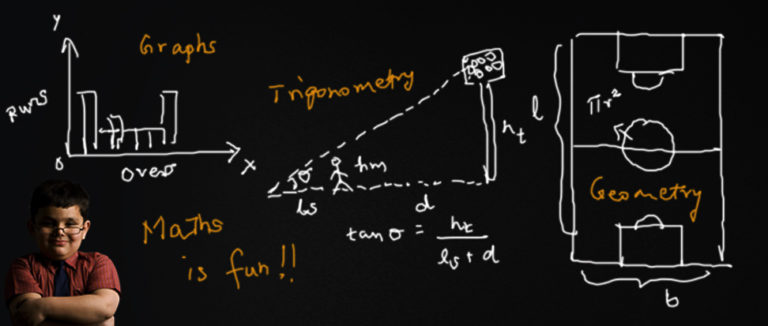
Building positive teacher-student relationships are an essential part of education. When students feel connected with their teachers, they are more likely to become successful in the math classroom and on the basketball court.
To build positive relationships with my students I do a number of things:
- I attend students’ sporting events. They like seeing their teachers in the stands cheering them on. Students like to talk about the game the next day and you can comment on good things such as, “I saw that 3 pointer you made at the buzzer!”
- I notice when students get a haircut, or get new glasses, or something else changes. This shows the student that I recognize them. Each student stands out in their own way; they don’t blend into the crowd.
- I allow students to come to my classroom before school starts to visit. I get to hear what they did over the weekend or what they did last night. Sometimes students need someone to listen to them and that’s why my door is always open every morning.
- I congratulate students when they receive an award.
- This past September I ran in a 5k race with some of my students (and community members) because they like to see their teachers participate in things they enjoy. (pictured below)

One may ask, “How can you incorporate building positive teacher-student relationships into math curriculum and coaching?” Keep reading and I’ll tell you how.
I teach in a rural community so I have several students who like to hunt and fish and I too enjoy both of these. It is currently deer season so to build relationships with these students I check up on these students asking if they saw anything or got a deer. Even if they didn’t get a deer they always have stories to tell me. To connect deer hunting to math curriculum we discuss how to score a buck’s antlers. I told a student if he gets a deer to bring in the antlers and we can score it. In order to do this, I would have to teach students how to read a measuring tape accurately. Students would also have to know or learn how to add and subtract decimals or fractions. When scoring a deer’s antlers, I would have the students work in groups of three to promote teamwork. Each student in the group would have a specific job, such as “the measurer”, “the recorder”, and “the calculator”. To help them in the scoring process, I would refer them to the website: https://shootingtime.com/hunting/how-to-score-a-buck/ . By doing this activity, students would be incorporating computational math skills, problem solving, and teamwork all while building a relationship with their teacher.
But not all of my students are hunters so I would transition my lesson to what they enjoy, such using Snapchat. I have Snapchat but it is very private and I only have close friends, NO STUDENTS! To build a relationship with my students, we discuss the benefits (and harms) of Snapchat. Students like to talk about all the cool things you can do with it and they end up teaching me new things. Students like when teachers are able to relate to what they like. I coach junior high girls’ basketball and they said they use Snapchat to remind each other of important basketball information; it is their main form of communication. To relate Snapchat to the math world, we discuss how Snapchat can be useful in solving math problems. There is now a new feature that allows you to scan a math problem and it not only gives you the answer but it provides you with the steps to solve it (shown below). If used properly this can be a helpful resource if students get stuck on their homework. The more connections you can make with your students, the better relationships you will make.

Building relationships with students does not mean you have to be their friend. In fact you can’t be their friend on any form of social media; otherwise your digital reputation could be destroyed. Nor should you become friends with student’s parents because this can bring fuel to the fire if something would occur. If you want to connect to your students through social media it should be through a school site that only posts information about school related activities, such as school Twitter or Facebook accounts. Even when using these you need to act professionally when making connections to your students. Building relationships means getting to know your students but not only through the social media world. To protect your reputation, be aware of what you post on social media (even on the school site). Make sure that you have a student’s consent before you post student’s pictures on social media, there are many eyes looking at these posts so you want to protect the reputation of everyone involved.
 Problem Solving Involves Teamwork
I absolutely agree that relationships are essential in the classroom. As a fellow math teacher, I know how much some students already “hate” math, so I already have “one strike against me”. If they don’t like ME and they don’t like math, then I have a steep mountain to climb. But if they at least like me and want to be in my class – even if they don’t like math – I have just turned that mountain into a more manageable hill. I do most, if not all, of the things you mentioned and they do make a difference. Another thing I do is simply share about myself so the students can see that we are similar. I might take a few minutes to share a story from the weekend, or share a time I got frustrated (they tend to think that we teachers never get frustrated or upset about things like they do). It is the little things that count, like you pointed out. Thanks for sharing!
LikeLike
I never thought about sharing with my students about times when I became frustrated. This could be a great teaching point. Not everything comes easy; even teachers have bad days or obstacles they must face. When students understand this, they may have more self-confidence knowing that it is not just them. Along with this, we need to teach our students how to deal with and overcome these frustrations or bad occurrences so they don’t happen again.
LikeLike
I never thought about sharing with my students about times when I became frustrated. This could be a great teaching point. Not everything comes easy; even teachers have bad days or obstacles they must face. When students understand this, they may have more self-confidence knowing that it is not just them. Along with this, we need to teach our students how to deal with and overcome these frustrations or bad occurrences so they don’t happen again.
LikeLike